
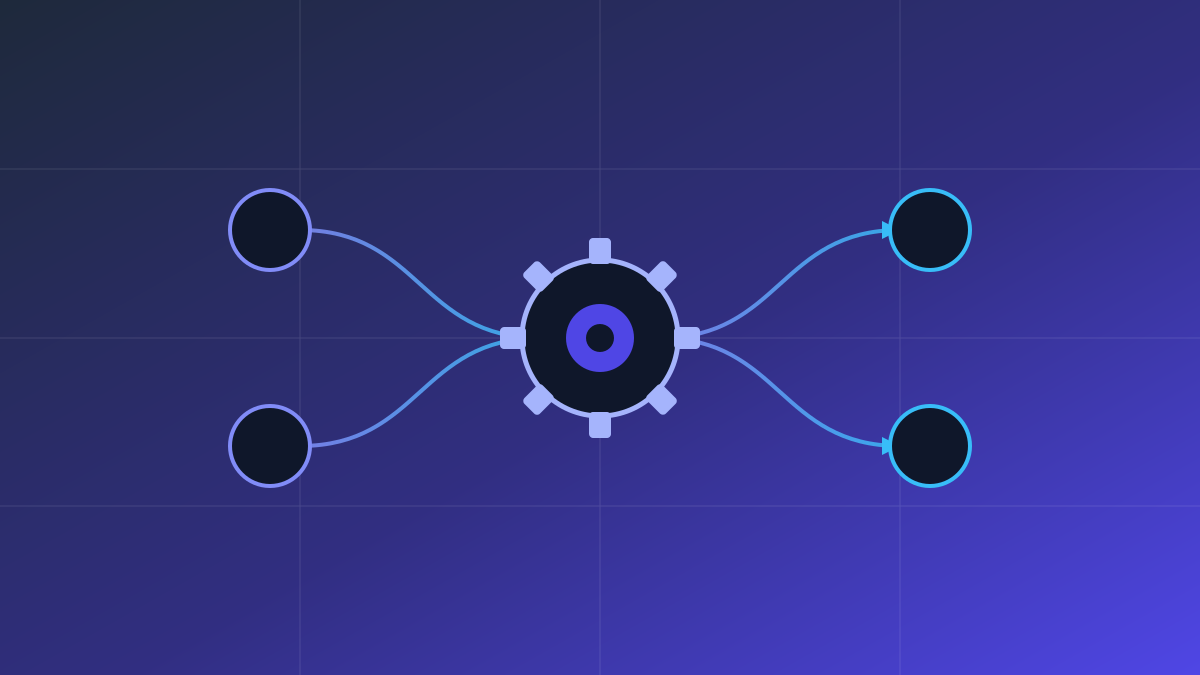
What is a webhook? A plain-English guide: how a webhook lets one app instantly tell another when something happens, how it differs from an API, real automation examples, and when you need one.
A webhook is a way for one app to instantly tell another app that something just happened - like a tiny automatic message that fires the moment an event occurs, so the second app can react right away. When a customer pays, a webhook can immediately notify your accounting tool. When a form is filled in, a webhook can instantly add the lead to your CRM. It is the "don't call us, we'll call you" of software: instead of one system constantly asking "anything new yet?", the other system pings it the second there is.
That little difference is what makes a lot of automation feel instant instead of delayed. In this guide I will define what a webhook is in plain terms, explain how it works, show how it differs from a regular API, give real business examples, and help you understand when a webhook is the right tool and when it is not.
What is a webhook, in plain English
Imagine you are waiting for a package. One option is to walk to the front door every five minutes to check if it arrived - that is tiring and usually pointless. The better option is a doorbell: you do nothing until the delivery person presses it, and then you react. A webhook is that doorbell for software.
Technically, a webhook is just a message that one system sends to a web address you give it, automatically, the moment a specific event happens. You tell Service A: "whenever a new order comes in, send the details to this address." Service A then does exactly that - it pushes the order data to your address as it happens. Whatever lives at that address receives the message and does something useful with it: records the sale, sends a thank-you email, updates a dashboard.
The key word is event-driven. A webhook fires because something happened, not on a schedule and not because anyone asked. That is what makes it feel instant.
How a webhook works
The flow is simple once you see the three players: the app where something happens, the address that listens, and the action that follows.
- You register a URL. In the settings of an app (your payment processor, form tool, store, scheduler) you paste a web address and pick which events you care about - "new payment," "new signup," "order shipped."
- An event happens. A customer pays, someone books a call, an order ships.
- The app sends the message. Instantly, that app sends a small package of data about the event to the URL you gave it.
- Your side reacts. Whatever is at that address - an automation tool, a small script, another service - receives the data and runs the steps you defined.
That is the entire mechanism. The clever part is that nothing is polling or waiting in a loop. The work only happens when there is real work to do, which makes webhooks both fast and efficient.
Webhook vs API: the difference that matters
People mix these up constantly, and the distinction is genuinely useful. An API is how one app asks another for something or tells it to do something - you initiate the conversation. A webhook is the reverse: the other app tells you when something happens, without you asking. One is a phone call you make; the other is a notification you receive.
| API call | Webhook | |
|---|---|---|
| Who starts it | You ask the other app | The other app tells you |
| When it happens | Whenever you decide to ask | The instant an event occurs |
| The analogy | You phone to check on something | They ring your doorbell |
| Best for | Fetching data on demand | Reacting to events in real time |
In practice the two work together. A webhook tells you "a new order arrived" the moment it does, and then your automation might use the app's API to fetch the full order details or push them somewhere else. The webhook is the trigger; the API is how you act on it.
Real webhook examples for business
This is where webhooks earn their keep. Almost every "it just happens automatically and instantly" workflow has a webhook underneath. Here are concrete ones:
- Instant lead capture. Someone fills in your website form, and a webhook drops the lead into your CRM and notifies your sales team within seconds - no manual copying.
- Payment to accounting. A customer pays through Stripe or PayPal, a webhook fires, and the sale is recorded in your books and a receipt is emailed automatically.
- Order to fulfillment. A new order in your store triggers a webhook that creates a shipping label and updates inventory.
- Booking notifications. A client books a call and a webhook posts the details to your team chat and adds it to the right calendar.
- Live dashboards. Every sale or signup fires a webhook that updates a metrics sheet or dashboard the moment it happens. This pairs perfectly with workflows that automate Google Sheets.
Notice the pattern: in every case, something happens in one place and you want another place to react immediately. That is the exact job a webhook is built for, and it is the backbone of most of the automated connections I build between tools.
When you need a webhook - and when you do not
A webhook is the right tool when timing matters and the trigger is a real event. If you need something to happen the instant a customer acts - capture the lead now, charge them now, notify the team now - a webhook is exactly right, and far better than checking on a schedule.
You do not need a webhook when:
- A periodic check is fine. If "sync the data once an hour" or "send a daily summary" meets your need, a simple scheduled task is simpler and perfectly adequate - no webhook required.
- You are the one initiating. If your process is "go fetch the latest records when I run my report," that is an API call, not a webhook.
- The other app does not offer one. Not every tool can send webhooks. When one cannot, a scheduled check that asks via API is the fallback.
The honest framing: webhooks are not better than scheduled tasks, they are different. Webhooks win when you need real-time reaction to events; scheduled tasks win when regular, predictable syncing is enough. Good automation uses whichever fits the job.
A note on reliability and security
Two practical things worth knowing as a business owner. First, webhooks occasionally fail to arrive - a network hiccup, a moment of downtime - so a well-built setup verifies the data later or retries, rather than assuming every message lands. Second, because a webhook is just data arriving at a public address, it should be secured: the receiving side should confirm the message genuinely came from the right app and was not faked. These are exactly the kinds of details that separate a webhook integration that quietly works for years from one that drops sales silently.
Related terms you will hear
- Trigger - the event that causes the webhook to fire (new order, new signup).
- Payload - the package of data the webhook carries about the event.
- Endpoint / URL - the web address that receives the webhook.
- Polling - the opposite approach, where you repeatedly ask "anything new?" instead of being told.
Where to start
The good news is that most modern tools - payment processors, form builders, stores, schedulers - already send webhooks, and most automation platforms can receive them. The real work is deciding which events matter, wiring them to the right actions, and making the whole thing reliable. I cover the realistic effort and cost of connecting your tools this way in my guide to how much business automation costs.
If you have a workflow that should happen instantly but currently relies on someone noticing and copying data by hand, a webhook is very likely the fix. Book a call and tell me which two tools you want to talk to each other, and I will tell you whether a webhook, a scheduled sync, or a mix is the right approach - and what it would take. You can also reach me through the contact form.
Frequently asked questions
What is a webhook in simple terms?
A webhook is a way for one app to instantly tell another that something just happened, so the second app can react right away. It is like a doorbell for software: instead of one system constantly checking "anything new?", the other system pings it the moment an event occurs - a payment, a new lead, a shipped order.
What is the difference between a webhook and an API?
An API is how you ask another app for something - you start the conversation. A webhook is the reverse: the other app tells you the instant something happens, without you asking. An API call is a phone call you make; a webhook is a notification you receive. They often work together - a webhook triggers the moment of an event, then your automation uses an API to act on it.
When should I use a webhook instead of a scheduled check?
Use a webhook when timing matters and you need to react the instant an event happens - capture a lead now, record a payment now, notify the team now. Use a scheduled check when regular, predictable syncing is enough, like an hourly data sync or a daily summary. Webhooks are not better, they are different: webhooks win on real-time, schedules win on routine.
Are webhooks reliable and secure?
They are, when built properly. Webhooks can occasionally fail to arrive due to a network hiccup, so a good setup verifies data later or retries rather than assuming every message lands. And because a webhook is data arriving at a public address, the receiving side should confirm the message genuinely came from the right app and was not faked. These details separate an integration that works for years from one that drops sales silently.
Do my business tools already support webhooks?
Most modern tools do - payment processors, form builders, online stores, and schedulers typically send webhooks, and most automation platforms can receive them. The real work is deciding which events matter, wiring them to the right actions, and making the whole flow reliable. If a tool does not offer webhooks, a scheduled check that asks via its API is the usual fallback.
Keep reading
Related service
Business Automation
I build custom automations that remove repetitive work end to end.
About the author
Yehonatan Saadia
Freelance automation, web & MVP engineer
I'm Yehonatan Saadia, a senior engineer who builds business automation, custom websites, and MVPs for small and mid-sized companies across the US, Europe, and Israel. These guides come from real client work, not theory.
Work with meHave a project like this?
Tell me what you're trying to automate or build and I'll tell you the fastest reliable way to ship it.