
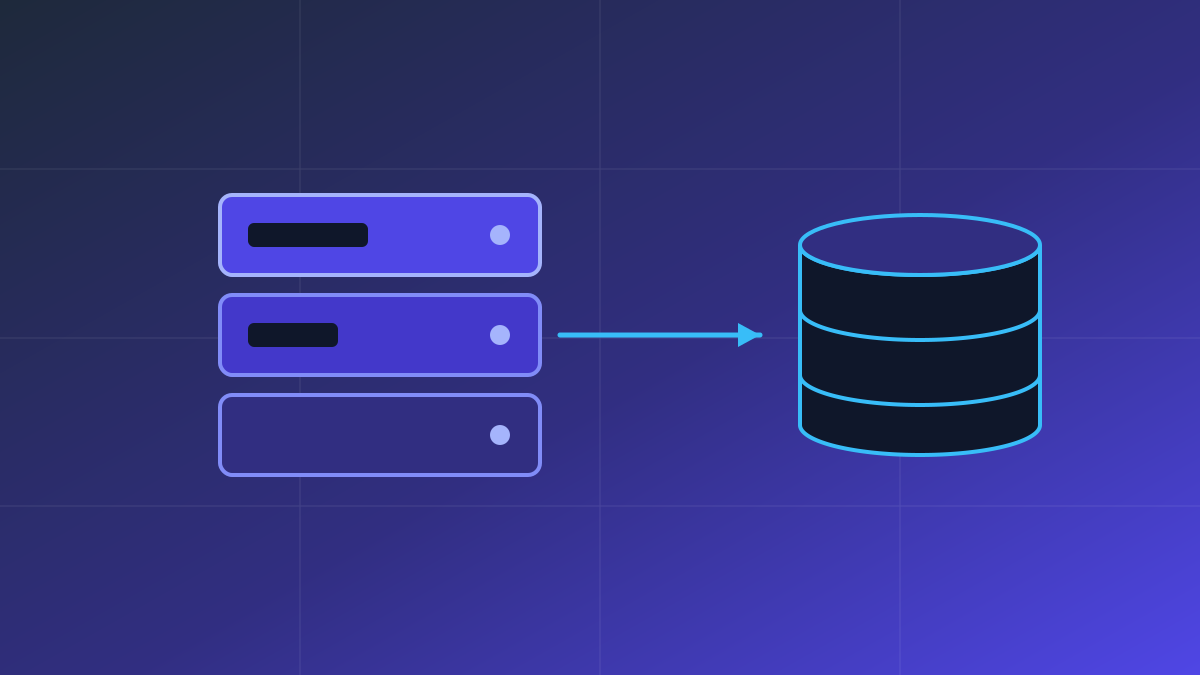
Connecting a POS to a physical terminal is not only connecting two devices. Decide which system is the transaction source of truth, what happens if the terminal approves and the POS fails, and how to...
Connecting a POS to a physical terminal is not only connecting two devices. Decide which system is the transaction source of truth, what happens if the terminal approves and the POS fails, and how to cancel or refund without issuing duplicate credit.
The POS should receive an internal sale ID before contacting the terminal. After response, retain POS sale ID, terminal result, amount, and time. If communication fails, show “unknown state,” not “declined” or “approved,” until the terminal or settlement record is checked.
EMV and acquiring arrangements require an approved provider and terminal for your route. Business implementation should cover sale, approval, document generation, void, refund, daily close, and reconciliation. Do not store card details in the POS unless the route and responsibilities are explicitly defined with the acquirer.
Verification
Current documentation from SHVA, the acquirer, and selected terminal.
Keep reading
Related service
Integrations
Make the systems you already pay for talk to each other.
About the author
Yehonatan Saadia
Freelance automation, web & MVP developer
I'm Yehonatan Saadia, a senior developer who builds business automation, custom websites, and MVPs for small and mid-sized companies across the US, Europe, and Israel. These guides come from real client work, not theory.
Work with meHave a project like this?
Tell me what you're trying to automate or build and I'll tell you the fastest reliable way to ship it.