
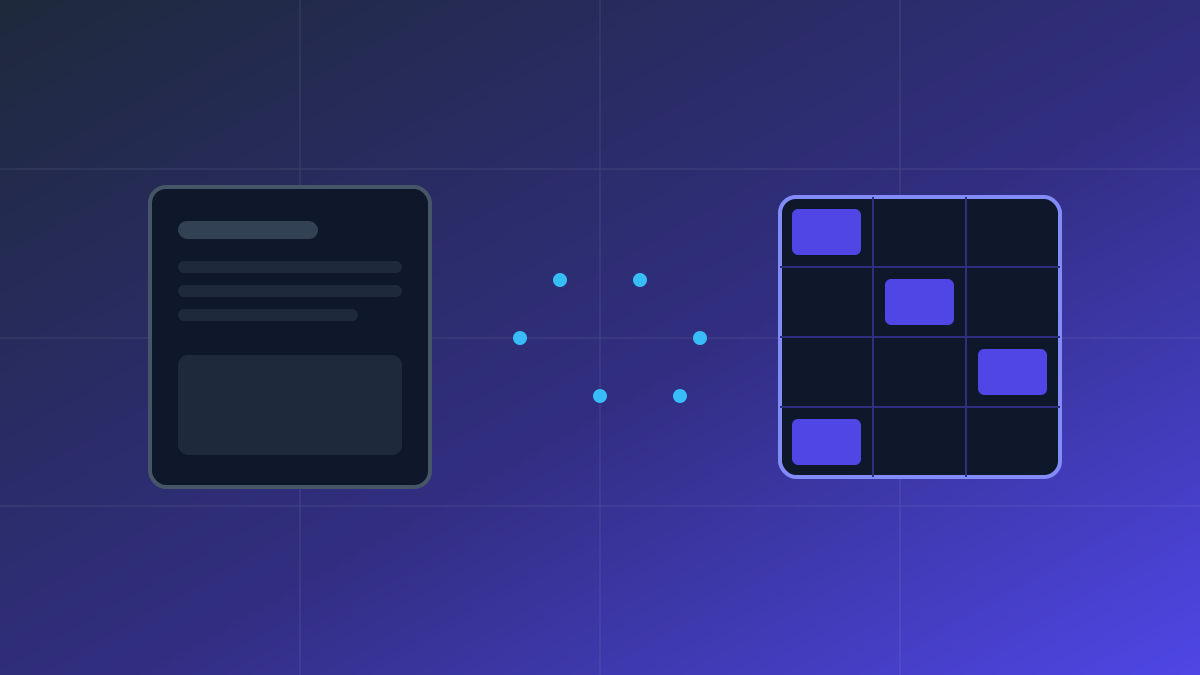
Web scraping turns the public web into a market-research dataset - competitors, prices, products, reviews, and trends at scale. What you can learn, how to structure it, and where the limits are.
Key takeaways
- Manual research samples a handful of examples and calls it a trend; scraping covers the whole market repeatedly, turning anecdote into evidence.
- Collecting product ranges across the market reveals the gaps - what every competitor sells and what nobody does.
- Tracking who is hiring for what is a public signal of where competitors are investing.
- The raw scrape is only the start; the value comes from structuring, cleaning and comparing it, and a recurring feed tracks how the market shifts.
- Stick to public, factual data, avoid personal data, respect site terms, and prefer an official API where one exists.
The public web is the biggest market-research dataset there is - if you can collect it at scale. Web scraping lets you gather competitors' prices, product ranges, reviews, hiring signals, and trends into a structured dataset, so decisions rest on real market data instead of a few manual samples. This guide covers what you can learn and how to approach it.
What you can research
- Competitor pricing and positioning across the market.
- Product ranges and gaps - what everyone sells and what nobody does.
- Customer sentiment from public reviews (see the reviews guide).
- Demand and trend signals over time.
- Who is hiring for what - a signal of where competitors invest.
Why scraping beats manual research
Manual research looks at a handful of examples and calls it a trend. Scraping looks at the whole market, repeatedly, so you see the real distribution and how it moves - the difference between an anecdote and evidence.
Turning data into insight
The raw scrape is just the start; the value is in structuring, cleaning, and comparing it over time. A one-off dataset answers a specific question; a recurring feed tracks how the market shifts. This is what I do for clients - see web scraping services.
Rules and cost
Stick to public, factual data, avoid personal data, and respect site terms - see is web scraping legal in Israel. Prefer an web scraping vs API where one exists. For pricing, see how much web scraping costs. Tell me the market question you are trying to answer and I will scope the data behind it.
Frequently asked questions
How is web scraping used for market research?
It collects public market data at scale - competitor prices, product ranges, reviews, trends, hiring signals - into a structured dataset, so decisions rest on the whole market rather than a few manual samples.
Why is it better than manual research?
Manual research samples a handful of examples; scraping covers the whole market repeatedly, so you see the real distribution and how it changes over time - evidence instead of anecdote.
Is market-research scraping legal?
Collecting public, factual data politely is low-risk. Avoid personal data, respect site terms, and prefer an official API where available. See the Israel legal guide.
One-off study or ongoing tracking?
Both: a one-off dataset answers a specific question, while a recurring feed tracks how the market shifts over time.
Keep reading
Related service
Web Scraping
Reliable web scraping and data pipelines that deliver clean data.
About the author
Yehonatan Saadia
Freelance automation, web & MVP developer
I'm Yehonatan Saadia, a senior developer who builds business automation, custom websites, and MVPs for small and mid-sized companies across the US, Europe, and Israel. These guides come from real client work, not theory.
Work with meHave a project like this?
Tell me what you're trying to automate or build. I reply within 24 business hours with a few targeted questions, then we walk through it on a free 30-minute call, with no commitment. You come away with a scope, a timeline and a fixed price - or a straight answer that it isn't worth building.