
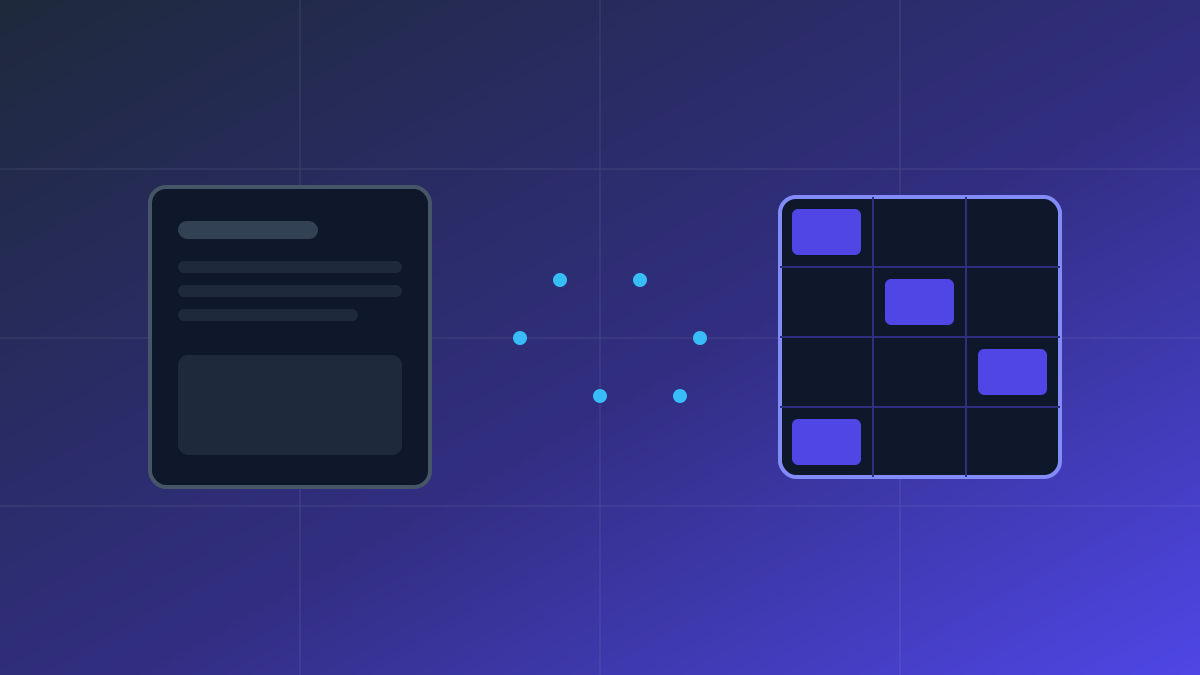
Proxies are the infrastructure that lets a scraper collect data at scale without being blocked. What they do, datacenter vs residential vs mobile, rotation, and what they add to the cost.
Key takeaways
- Hundreds of requests from one IP get noticed and blocked; proxies spread them across many addresses so large scrapes stay reliable.
- Datacenter proxies are cheap and fast but easy to block, so keep them for unprotected targets; residential IPs are the workhorse for protected sites.
- Rotation keeps any single IP below a suspicious request count - essential for large jobs and a big reason scale costs more.
- Small one-off pulls from unprotected sites often need no proxies; otherwise budget from a few dollars a month to hundreds, billed by bandwidth or IP.
If a scraper sends hundreds of requests from one address, a site notices and blocks it. Proxies are the infrastructure that spreads those requests across many addresses so collection stays reliable at scale. This guide explains what proxies do, the main types and when to use each, and what they add to the cost - the plumbing side of serious scraping.
What a proxy actually does
A proxy routes your request through a different IP address, so from the site's side the traffic looks like it comes from many different users rather than one bot hammering the server. Combined with polite pacing (see without getting blocked), this is what keeps a large scrape from being cut off.
The main types
- Datacenter proxies - cheap and fast, but easier for sites to detect and block. Good for unprotected targets.
- Residential proxies - real consumer IPs, much harder to block, more expensive. The workhorse for protected sites.
- Mobile proxies - the most trusted and priciest, for the toughest targets.
Rotation
Rotating proxies switch the address between requests, so no single IP makes enough requests to look suspicious. This is essential for large jobs and is a big part of why scale costs more. This is what I do for clients - see web scraping services.
What proxies add to the cost
Proxies are usually billed by bandwidth or by IP, from a few dollars a month for small jobs to hundreds for large ones - one of the "hidden" costs covered in how much web scraping costs. For simple, small, unprotected pulls you often need none at all; the need grows with scale and protection. New to scraping? Start with what web scraping is.
Frequently asked questions
Why do web scrapers need proxies?
So a large number of requests do not all come from one IP address, which sites detect and block. Proxies spread requests across many addresses, keeping collection reliable at scale.
Datacenter vs residential proxies - which do I need?
Datacenter proxies are cheap and fast but easier to block, fine for unprotected sites. Residential proxies use real consumer IPs, are much harder to block, and are the workhorse for protected targets, at a higher price.
Do I always need proxies to scrape?
No. Small, one-off pulls from unprotected sites often need none. The need for proxies grows with scale and with how hard the target tries to block bots.
How much do proxies cost?
Usually billed by bandwidth or by IP - from a few dollars a month for small jobs to hundreds for large ones. It is one of the ongoing costs to budget for.
Keep reading
Related service
Web Scraping
Reliable web scraping and data pipelines that deliver clean data.
About the author
Yehonatan Saadia
Freelance automation, web & MVP developer
I'm Yehonatan Saadia, a senior developer who builds business automation, custom websites, and MVPs for small and mid-sized companies across the US, Europe, and Israel. These guides come from real client work, not theory.
Work with meHave a project like this?
Tell me what you're trying to automate or build. I reply within 24 business hours with a few targeted questions, then we walk through it on a free 30-minute call, with no commitment. You come away with a scope, a timeline and a fixed price - or a straight answer that it isn't worth building.